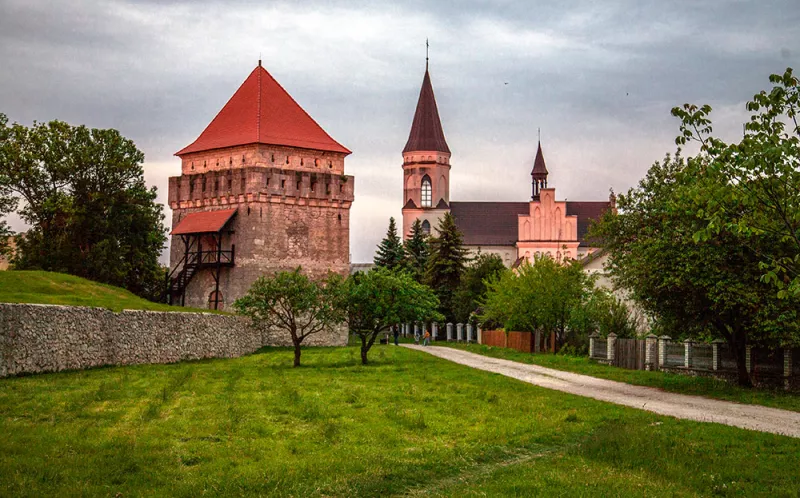

It is already clear from the name of the town Skalat that it is somehow connected to rocks ("skal"). Indeed, the town emerged near three cliffs, which are parts of the Medobory/Tovtry mountain range.
Source: Ukraine Incognita
The first written mention of this settlement dates back to 1512 when Janusz Swerchowski, the castellan of Vyslicz, the starost of Terемugovlian and Lublin, was granted permission to buy the villages of Skalat, Loshnyova, and Sushchyn from their previous owner Stanislav Loshnyovsky. In 1600, King Sigismund III granted the town Magdeburg rights. However, at that time, it was known under a different name.
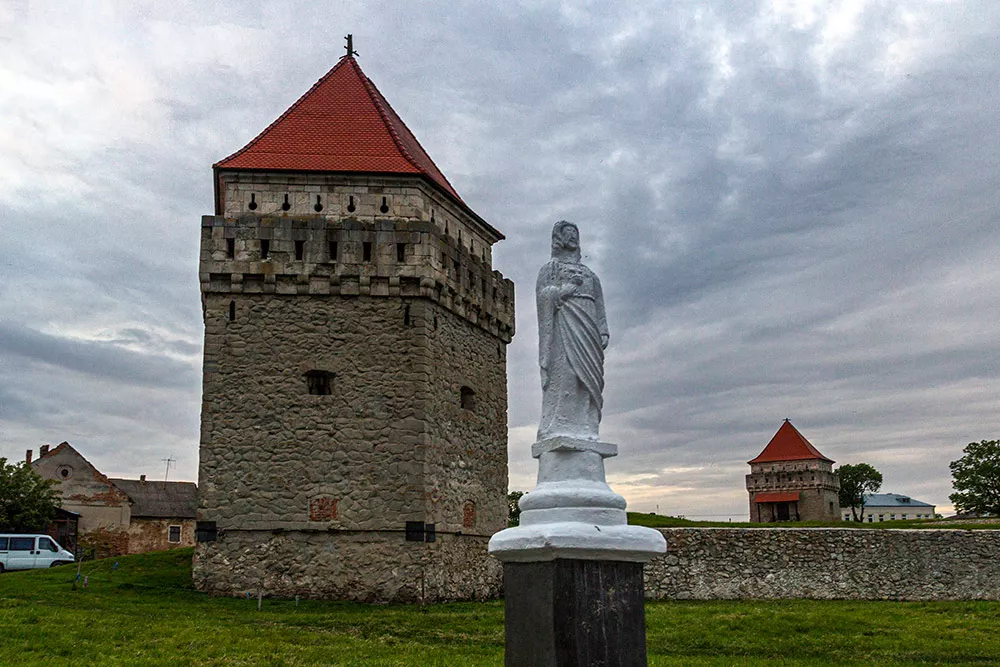
It is believed that the castle in Skalat was built only in 1630 by the knight Krysztof "Pomyan" Wichrowski. In fact, mentions of fortifications in Skalat date back to the 16th century, which was confirmed during the recent restoration.
The modern castle resembles little the original stronghold. At the end of the 19th century, it was "restored" at the expense of a member of the city administration and a representative to the Galician Sejm, Moritz Rosenstock von Rostotsky.
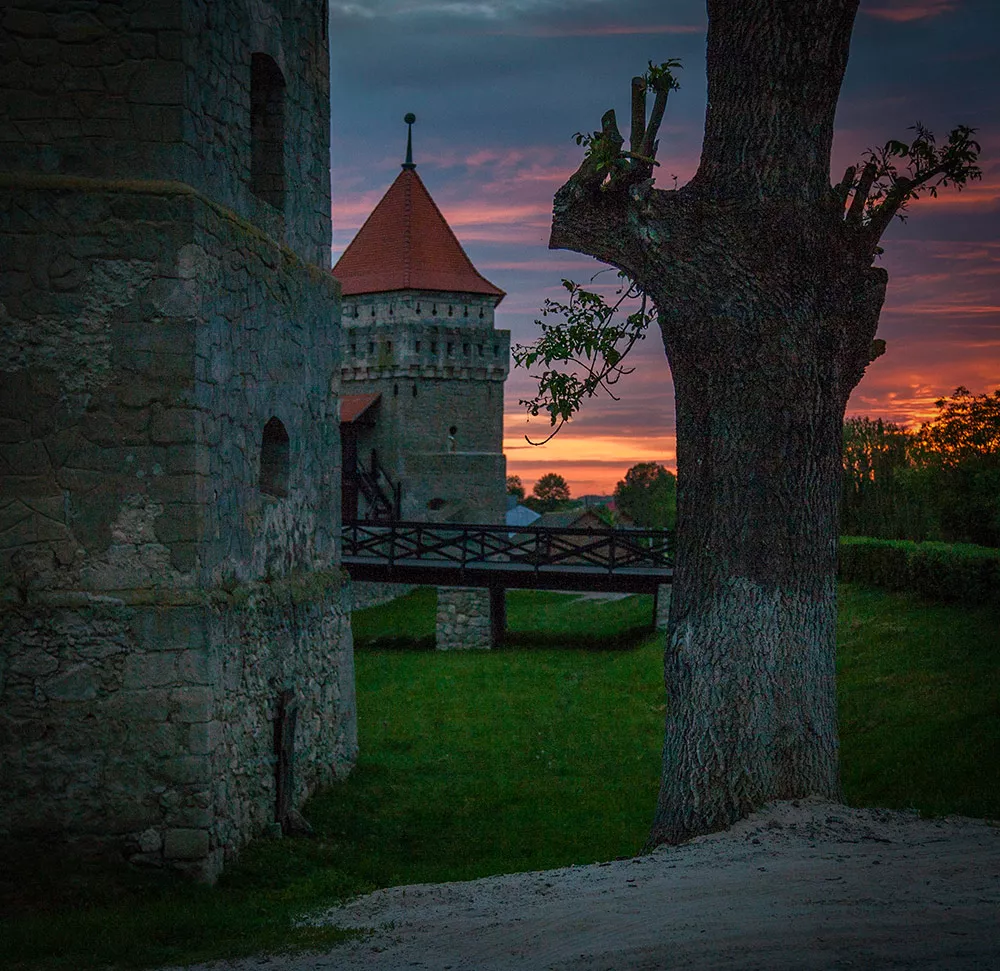
The word "restoration" is placed in quotes for a reason. In reality, it was a complete reconstruction in a rather fanciful style of the then-popular pseudo-historism. The project was developed by the renowned architect Teodor-Marian Talowski (the author of the famous "Elżbieta" in Lviv’s so-called "Railway" square).
However, it is not worth throwing stones at those "restorers." Today, we have similar examples. It is enough to recall how, after Independence, the "restorers" made a complete "improvement" of the famous Old Fortress in Kamianets-Podilskyi. Now we have something incomprehensible in the style of Disney cartoons (we remain silent about the tower that collapsed due to poorly executed interventions).
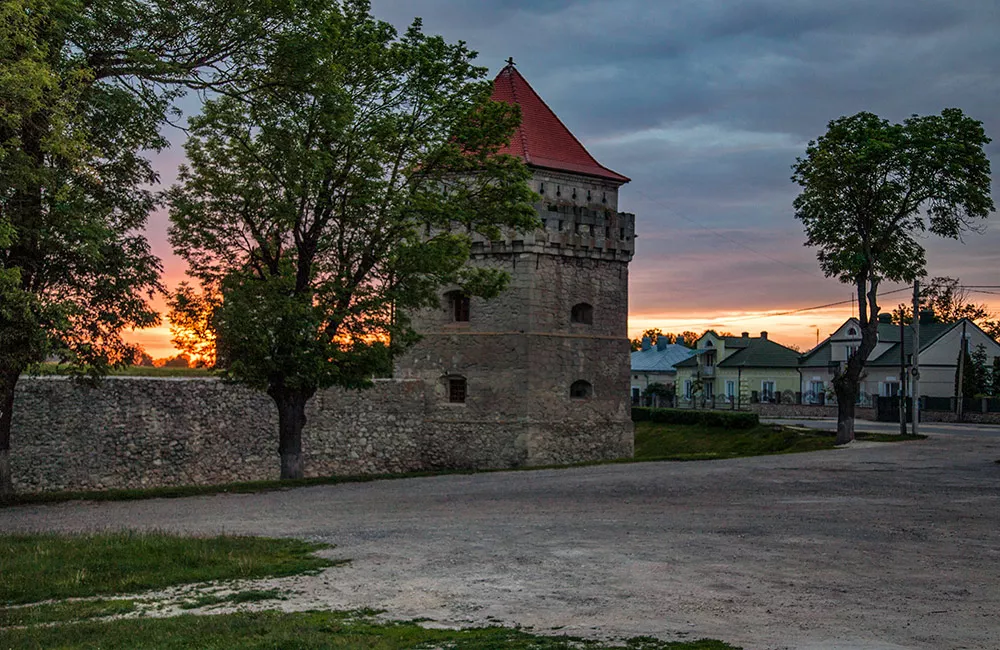
Throughout its history, Skalat has repeatedly suffered from Tatar raids. But the biggest disaster occurred in 1675 when the armies of the vizier Ibrahim Shishman completely destroyed the town and the castle. The crown forces of Jan Sobieski tried to fend off the fortress but were unsuccessful.
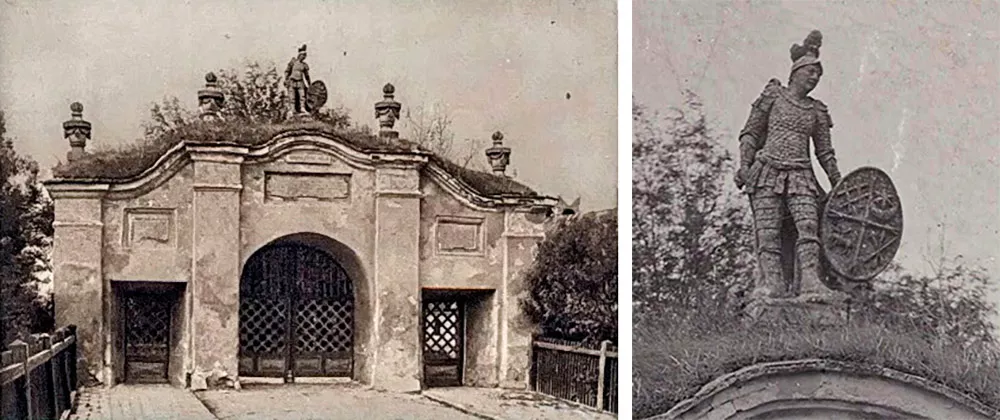
After the Ottomans returned Podilia to the Commonwealth in 1699, the owner of Skalat became the Sian castellan Jan Firlej. He rebuilt the castle that had been devastated during the war with the Turks. However, it was no longer an defensive structure but a residence. In particular, besides repairing the towers and walls, he constructed a palace and an ornate baroque gate, decorated with a knight statue and stone slabs inscribed with the history of the castle. This gate was destroyed during World War II.
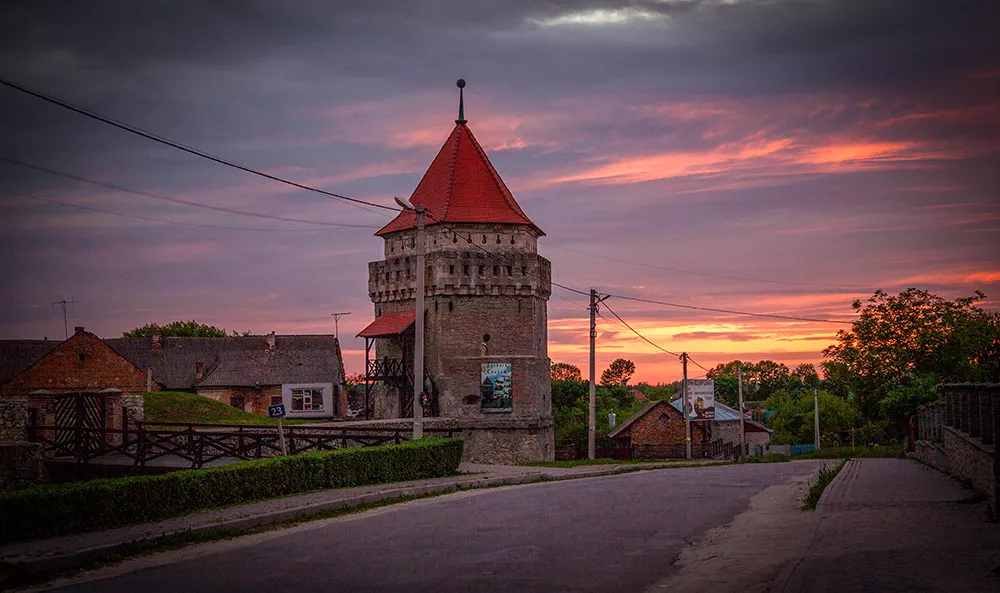
The fortress also suffered greatly during World War I. The monument was rebuilt then, but not entirely – Alexander Potocki, the then-owner of the castle, simply lacked the funds. Unable to manage the fortress, he donated it to the town. But soon, a new world war broke out, which also left significant scars on the castle. Only in the 1960s was the monument brought to order – the towers were patched, the upper tiers were restored (according to photographs), it was covered with red roof tiles, and metal ties were installed. A new stage of restoration and repair began after a storm knocked down the roofs of several towers in 2004.
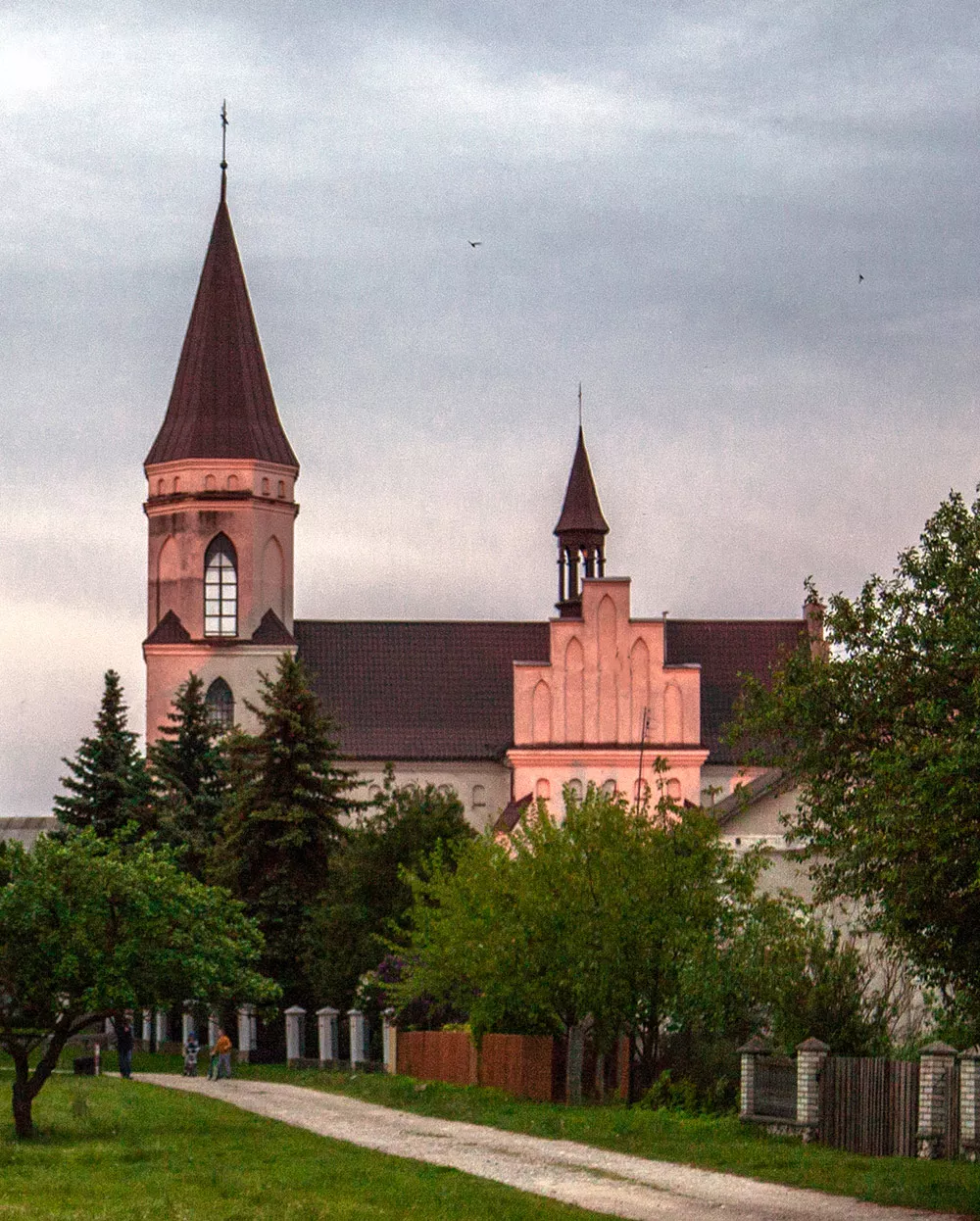
Next to the castle stands the majestic and beautiful neo-Gothic church of St. Anna. At first glance, it appears to be as ancient as the fortress. But this is a mistake. The temple is completely modern, as its construction was finished in 2002.
The first church on this site was built back in 1642. During the war with the Turks and during Ottoman rule, the temple suffered significant destruction. Therefore, in 1702-1703, it had to be rebuilt almost from scratch. What happened to that church afterwards is unknown. It may have burned down or, considering previous destructions, became dilapidated and had to be dismantled. It is known that construction of the third church began in 1817 and was consecrated ten years later, in 1827 – in honor of the Assumption of the Blessed Virgin Mary. It can be assumed that the early 18th-century structure was not demolished at all, but used as a kind of "core" for the successor temple.
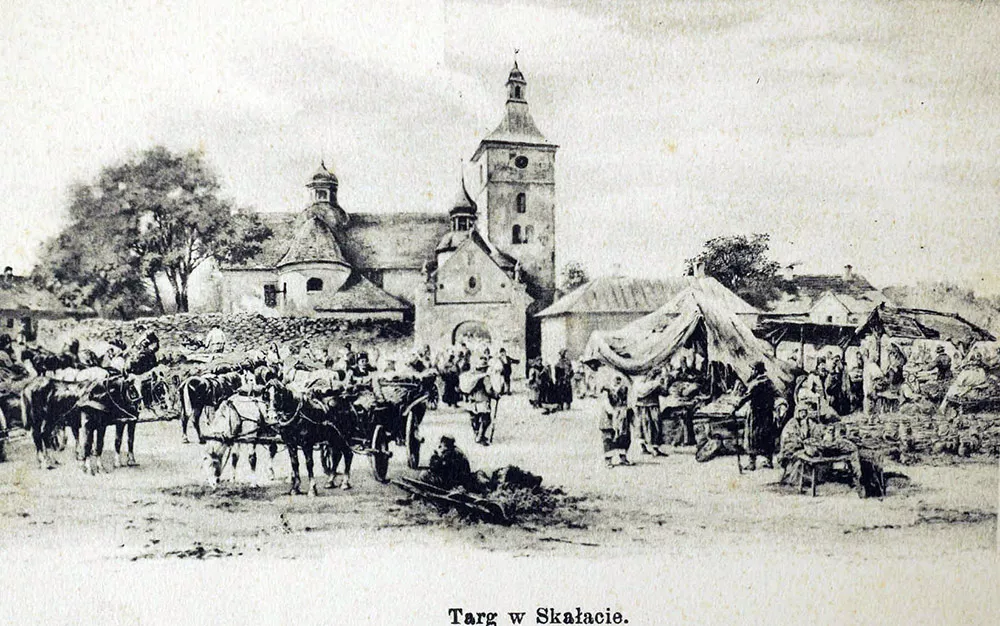
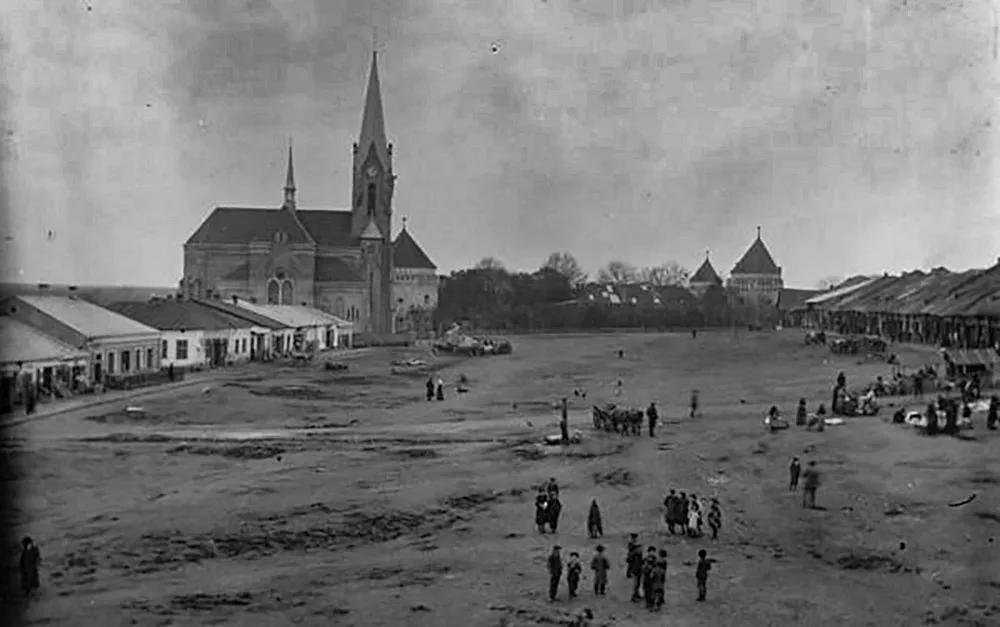
The church before the fire in 1898. The defensive structure traits can be clearly seen.
The last one stood until 1898 when it burned down in yet another fire. Many photographs of it have survived to our times. It is clear that the church had distinctly expressed defensive-fortification features. This confirms the version that in the early 19th century, there was not "zero" construction, but rather a large-scale reconstruction of the previous temple.
The neo-Gothic church, built according to the project of architect Teodor-Marian Talowski.
It is unknown what happened during 1817-1827, but after the 1898 fire, the church had to be rebuilt from scratch. It was built in 1900 at the expense of the then-owner of the town Mauricius Rostotsky and starost Antoniy Shidlovsky according to the project of the previously mentioned Teodor-Marian Talowski (the same one known for the Lviv "Elżbieta" church). It is worth reminding that Talowski developed the restoration project of the Skalat Castle.
The church survived World War I, the Ukrainian-Polish, and Polish-Soviet wars. However, in 1944, when the Soviet army drove the Germans out of Skalat, the church still "received" its share. In particular, several Soviet shells destroyed its belfry.
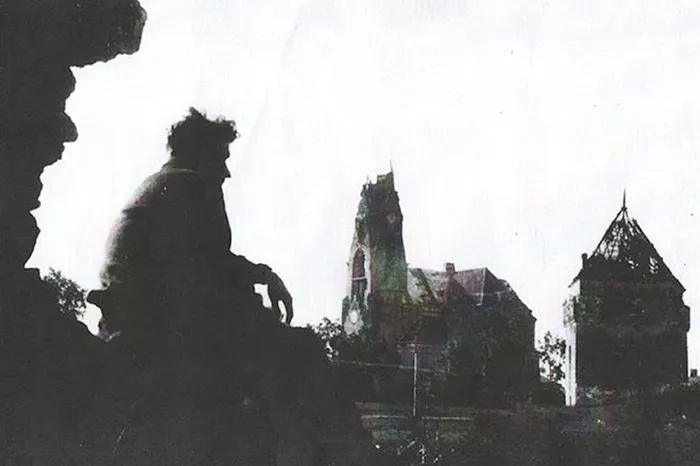
- The church with signs of shelling.
The grand temple was finally destroyed in 1959. According to a widespread local legend, it was destroyed in anticipation of Nikita Khrushchev's visit, who had just begun an active anti-religious campaign. In reality, the church was utterly ruined not due to the hypothetical visit of the main "corn man" of the USSR. The reason was more prosaic. At that time, workshops for "Silgosptekhnytsi" were being built in Skalat, and the managing individuals decided that the heavily damaged church could be an inexhaustible source of scarce bricks and stones. And so they did.
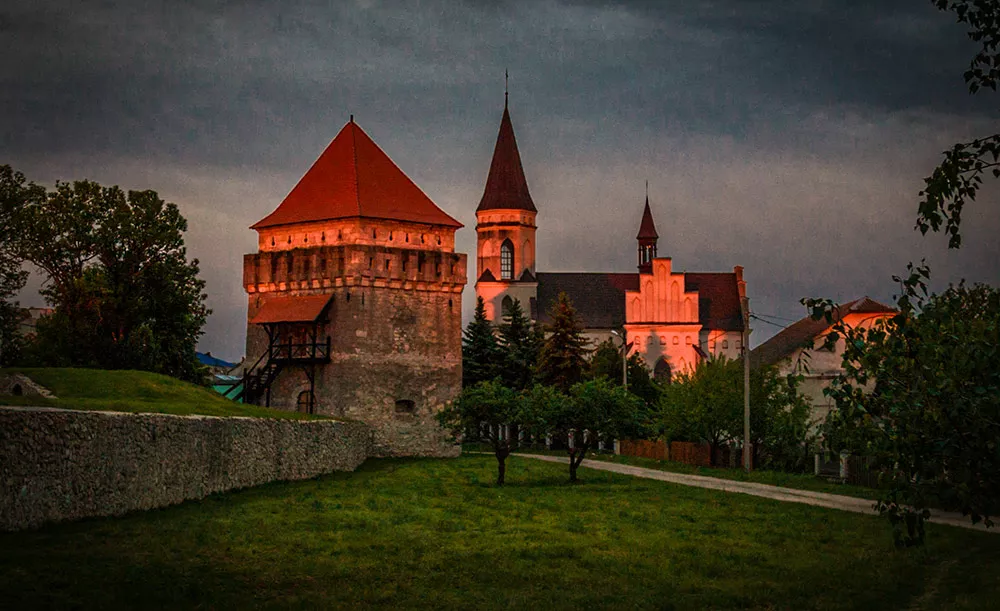
- The castle and the church in the last rays of the sun.