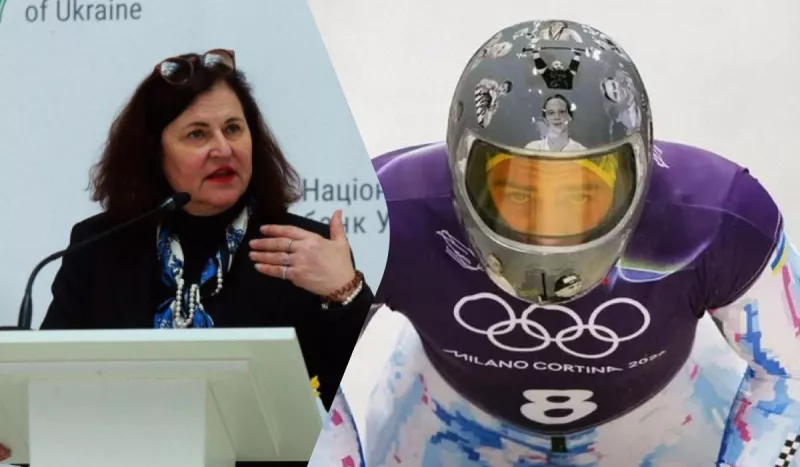

The International Olympic Committee (IOC) has decided to disqualify Ukrainian skeleton athlete Vladyslav Heraskevych, which has provoked a strong reaction from European officials. In particular, the European Union's ambassador to Ukraine, Katarina Maternova, stated that she was "horribly disappointed" by this decision.
Heraskevych, who planned to compete at the 2026 Winter Olympics, trained in a helmet adorned with images of Ukrainian athletes who died as a result of the war, in order to honor their memory. "This is not a violation, but our moral duty," Maternova emphasized on social media, highlighting the importance of recognizing the victims of war.
Criticism of the IOC also came from other European officials, including Estonian Foreign Minister Margus Tsahkna, who stressed that "remembering the dead is not only a moral obligation but also an act of humanity."
The disqualification of Heraskevych occurred against the backdrop of the IOC allowing 20 Russian and Belarusian athletes to participate in the Winter Olympics under a neutral flag. This has further outraged Ukrainian and European representatives, who deem such a decision unacceptable in the context of Russia's aggression against Ukraine.
Last week, in connection with the ongoing military attacks in Ukraine, even more electrical energy transmissions were cut off, while the peaceful population suffers from the cold and inadequate heating. Maternova noted that Heraskevych wanted to show the world that the war continues and to draw attention to the tragedies that the Ukrainian people are enduring.
At the same time, Ukrainian Foreign Minister Andrii Sybyga described the decision as an uncomfortable moment for the IOC, which, in his opinion, undermines the organization's reputation. "Future generations will remember this moment as shameful," Sybyga noted.